Abstract
- Chinese language EVs will probably enter US market quickly, utilizing Chinese language tech regardless of preliminary badging by US corporations.
- EU explores cooperation with China to permit Chinese language EVs, recognizing advantages for each events.
- Historic parallels present US ought to embrace Chinese language EVs, construct partnerships to spice up home business.
The US will in all probability not get Chinese EVs within the subsequent three and a half years, however it’s merely a matter of time earlier than this occurs. Even when these EVs are initially badged Ford or GM, below the pores and skin they’ll use Chinese language know-how or native tech developed with Chinese language experience. Tariffs can maintain up the method for some time, however the pressures of worth and know-how won’t be denied endlessly.
Ford CEO Jim Farley drove a Chinese language EV for six months, and he beloved it. He additionally known as the Chinese language automobile business each an existential menace and essentially the most humbling factor he had ever seen. Farley mentioned Ford administration frequently visited China, and would fly in Chinese language automobiles to check drive and take them aside to see what’s what.
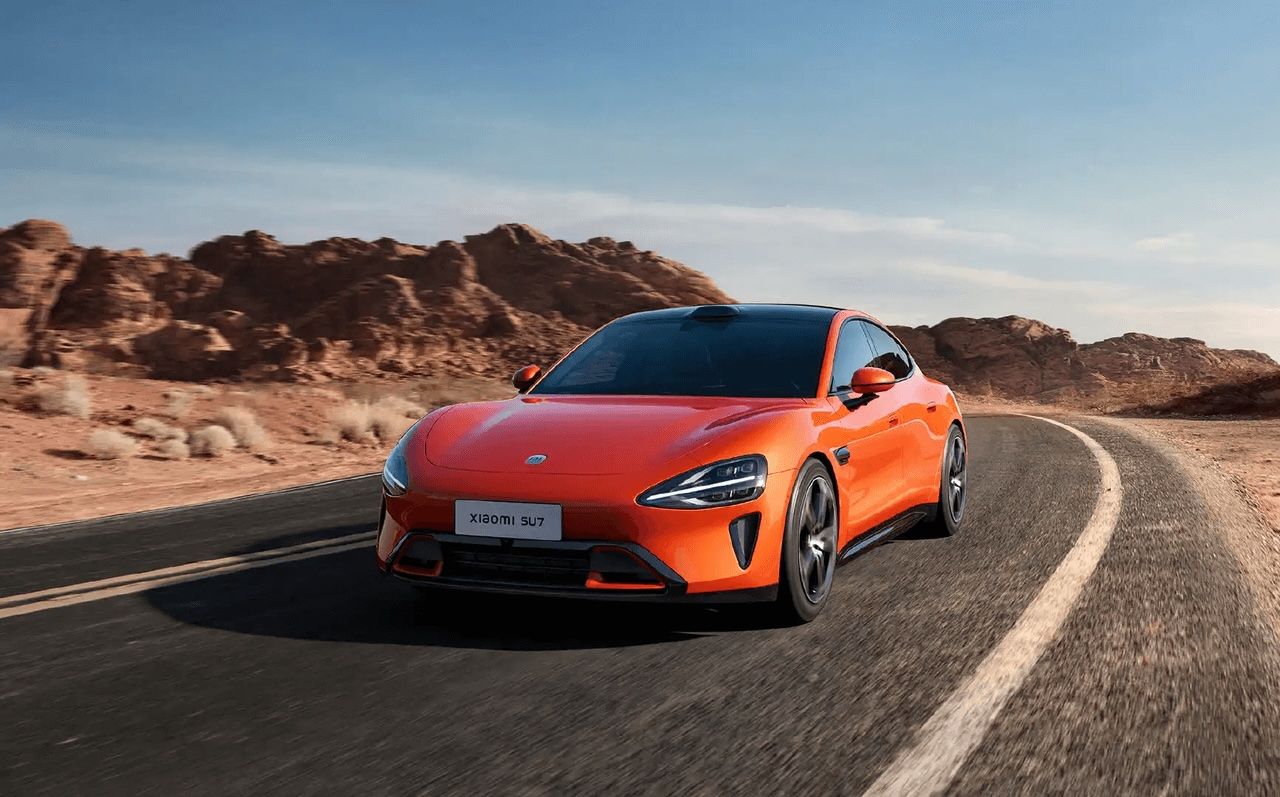
The automobile Farley drove was an Xiaomi SU7, an EV sedan and direct competitor in China to the Tesla Mannequin 3. It was the primary EV made by phone maker Xiaomi. Though the SU7’s gross sales stuttered after self-driving software program induced a deadly accident, the corporate recovered fairly effectively.
So when Xiaomi launched its YU7 just a few days in the past, this $35,000 Tesla Model Y competitor received 240,000 orders in 18 hours. Not the 290K orders positioned by scalpers within the first hour to get locations within the queue, however actual orders with deposits paid. The YU7 involves market about 4 p.c decrease than the Mannequin Y, a premium worth for native EVs in China, and Tesla must reply.
Associated
The all-new BYD Sealion 7 is a big fish in a small pond
BYD made a reputation for itself by producing value-based EVs. Nevertheless, the Sealion 7 is the most costly mannequin but. Is it price it?
Tesla as barometer of Chinese language EV energy
Tesla in a aggressive market
Tesla continues to be the worldwide EV chief, but it surely has been shedding market share within the US since 2024, and Q1 in Europe was not good for the model. Though a few of Tesla’s latest woes will be tracked to CEO Musk’s political actions, its decline over time was most certainly the flood of EV competition coming to the market. Tesla has no direct Chinese language competitors within the US, however faces rising stress from BYD in Europe, regardless of EU tariffs on BYD in the meanwhile.
Tesla’s Chinese language market share has dropped from a excessive of 15% in 2020 to 10% final yr, and over 7% to this point this yr. Automotive consumers in China don’t care about Musk’s politics, and by all accounts he’s extremely popular over there. As a substitute, Tesla decline on the earth’s greatest auto market was attributable to large native competitors and shifting market preferences.
BYD is the largest carmaker in China and overtook Tesla in EV gross sales final yr. Chinese language consumers are spoiled for alternative with regards to EVs, and more and more, they select homegrown manufacturers.
In addition to BYD, there’s additionally Geely, SAIC-GM-Wuling, and Nio. To not point out newcomer Xiaomi.These manufacturers are usually not out there within the US, however they’re actually widespread in Europe, Mexico, Korea, Australia, and different components of the world.

Associated
At this point, it feels like Tesla might never make an affordable car
The manufacturing of Tesla’s new low-cost EV has reportedly been delayed.
The case in opposition to Chinese language EV imports
Authorities subsidies and product dumping

BYD
These against Chinese language EVs within the US market level out that China has spent billions subsidizing its EV business and the underlying provide chains because the early 2000s. Additionally they consider that Chinese language EVs will probably be dumped below price worth within the US market.
Subsidies
The Chinese language authorities has spent billions because the early 2000s subsidizing its EV business, together with the provision chains that now enable Chinese language automakers to construct higher automobiles cheaper than anyplace else on the earth. They realized early on their business couldn’t compete with established know-how resembling ICE and hybrid automobiles. The nation had a big and quickly urbanizing inhabitants in search of work, large reserves of the uncooked supplies wanted to construct EVs, and a rising city air pollution drawback. So it is comprehensible why they spent lots constructing the business.
It is importnt to recollect too that US corporations additionally obtain authorities cash. With out the $17 billion bailout in 2008, GM and Chrysler would in all probability not be round. Tesla began constructing EVs utilizing a $460m authorities mortgage, and has acquired varied incentives through the years, together with from the Chinese language authorities. Probably the most seen EV subsidy within the US is the $7,500 tax incentive on new EVs that adjust to native content material guidelines.
Product dumping
Product dumping is when backed items are offered abroad for lower than the price of producing it, thereby harming the corresponding producers within the receiving nation. However Chinese language EVs are promoting at a major premium in Europe.
The BYD Seagul is a subcompact hatchback that sells for below $10,000 in China, whereas the identical automobile, renamed Dolphin Surf, sells for round $26,000 within the EU. There’s at present a complete EU tariff of 27% on BYD automobiles within the EU, however even with this, the Dolphin nonetheless sells for twice as a lot because the Seagull in China. That’s maximizing revenue, not dumping.

Associated
Renault aims to drive down the price of electric cars, with the Renault 5 leading the charge
The brand new compact mannequin is alleged to be 33 per cent cheaper than the Zoe.
The EU resolution
Management and cooperate

Volkswagen
The EU has acknowledged that it can not preserve Chinese language EVs out, and that tariffs are hurting the EU export sector as effectively. For instance, a 3rd of German automobile gross sales are in China.
BYD is constructing a manufacturing facility in Hungary to construct EVs within the EU. AESC is a Japanese-Chinese language battery producer which has simply constructed an enormous manufacturing facility subsequent to the Renault EV hub in Douai in France. This plant, with ten gigawatt-hours capability, was constructed with French and EU monetary help to convey important industrial know-how to Europe.
There are additionally EU-China talks to take away all tariffs and exchange these with minimal pricing offers — which suggests Chinese language automobiles can’t be offered under a sure worth. Though the buyer nonetheless has to pay more as with tariffs, it is a cooperative construction, and the concept is to unlock mutual advantages for each events.

Associated
The trail for Chinese language EVs to the US
We’ve got seen this film earlier than

Tesla
Within the Nineteen Seventies, a number of oil worth shocks induced a spike in demand for small, low cost, fuel-efficient Japanese automobiles. Honda, Nissan, Toyota, and different Japanese carmakers have been exporting over 600,000 automobiles a yr. And identical to at the moment, US carmakers discovered lobbying simpler than competing, and Japanese automobiles have been topic to heavy tariffs, later changed by pricing agreements. From the Nineteen Eighties on, they began constructing factories within the US, utilizing American staff to make automobiles for US drivers. Toyota, Honda, and Nissan are actually as a lot a part of the US auto panorama as Ford and Chevrolet.
US/Chinese language cooperation
Tesla is the plain instance of a carmaker with a big footprint in each the US and China. All conventional US carmakers are concerned in some partnership or one other in China, though gross sales of US title badge automobiles are struggling.
Chinese language EV dominance is comparatively new, solely changing into distinguished round 2020, regardless of a long time of improvement. Business insiders level to when Tesla constructed its Chinese language manufacturing facility, and that this created a benchmark for the Chinese language EV business.
China is the world chief in EV batteries, the main part in EV innovation and pricing. If the major Chinese battery makers are allowed to construct factories within the US, utilizing American staff and uncooked supplies, it will be a large enhance for the US EV business. You will discover states and cities providing large monetary incentives to draw such enterprises.
Skunkworks
Ford has created its model of Skunkworks, aimed at producing really affordable EVs. Why not kind an EV partnership with somone like Xiaomi, which CEO Farley admires a lot? It might not be a sellout by Ford, however relatively a fast and efficient solution to quick observe the mental property benefits that China at present holds to kick-start the dormant US EV sector.
US EV makers can not actually make one for a lot below $40K, with $50K the common promoting worth. If the US can get again on the EV fast-track, and US drivers can get actually good EVs for below $30K, jobs will probably be created, economies stimulated, and hopefully Mr Farley will actually get pleasure from driving his Ford EV.

Associated
Tesla’s ill-fated Cybertruck destined for failure
It is tough to see how Tesla may pull out a victory at this level.
Trending Merchandise


Wireless Keyboard and Mouse, Ergonomic Keyboard Mo...

Wi-fi Keyboard and Mouse Combo – Rii Commonp...
LG FHD 32-Inch Computer Monitor 32ML600M-B, IPS wi...


ASUS RT-AX86U Pro (AX5700) Dual Band WiFi 6 Extend...