Abstract
- You should definitely cache offline maps, bookings, and itineraries not only for the locations you are headed, however anyplace cell indicators is likely to be weak or absent.
- Obtain any music, movies, and podcasts you may want properly upfront of any journey. Do not overload your storage, however do not give your self too little content material to stave off boredom, both.
- If you already know an space would not have satisfactory cell protection, you would possibly as properly flip off your cellphone’s mobile radios. On lengthy journeys, that additional energy can come in useful.
I spent properly over a decade dwelling in Texas. For outsiders, it is virtually tough to elucidate how numerous the state will be. Politically, as an illustration, a lot of the state is deep crimson, however locations like Austin and Houston will be surprisingly liberal. That variety extends to its panorama. Whereas the Hill Nation is comparatively lush, you may discover swamps and seashores within the south, and pure desert out within the west. Connecting all of it are large stretches of freeway, punctuated by rural cities which can be generally barely clinging on to existence.
All that is to say that I am used to driving for hours by way of areas which have little to no mobile sign — T-Mobile is not significantly involved about bringing 5G to the outskirts of Giddings. Since I am not keen to drag out a paper map and tune into AM radio, I’ve developed quite a few ways for coping with mobile wastelands that ought to hold a visit rolling alongside easily, whether or not you are in Texas, Toledo, or Ontario.
Cache your music, podcasts, and video properly upfront
Be able to dodge boredom
Considered one of my best annoyances when driving by way of rural Texas was Spotify immediately pausing as a result of I forgot to cache the playlist I used to be listening to. If I did not have any saved podcasts, or music synced from my pc, I might find yourself driving in silence till a cell sign returned. There’s not a lot radio price listening to between Austin and Houston, I am going to inform you that.
You most likely should not cache your whole music and podcasts — that may devour dozens and even a whole bunch of gigabytes — however you need to have sufficient materials to keep away from extreme repeats. Actually, I am going to typically construct playlists particularly for journey, like my At Sea assortment. That provides me one thing mood-setting to hearken to whereas leaving loads of room for all these pictures and movies I am sure to shoot.
Watch out about caching films and TV reveals — you would possibly like the concept of getting a complete TV collection useful, however video is much more storage-hungry than music, and it is simple to overestimate the quantity of free time you may have. It is most likely pointless to cache any video if all you are doing is heading out on a one-day highway journey.
No matter you propose to obtain, do not depart it till the final minute. Absent-mindedness or a sluggish Wi-Fi hotspot might intervene together with your plans.
Cache as many offline maps as you may
No surprises, please

It is a rookie mistake to suppose you are good for the remainder of a visit you probably have a powerful connection whenever you begin navigation and hold your app of selection in current reminiscence. Not so — whereas all navigation apps cache a specific amount of geography mechanically, they’re nonetheless fetching information as you go, particularly on lengthy drives. Additionally, you by no means know when and the place you may must make a pit cease.
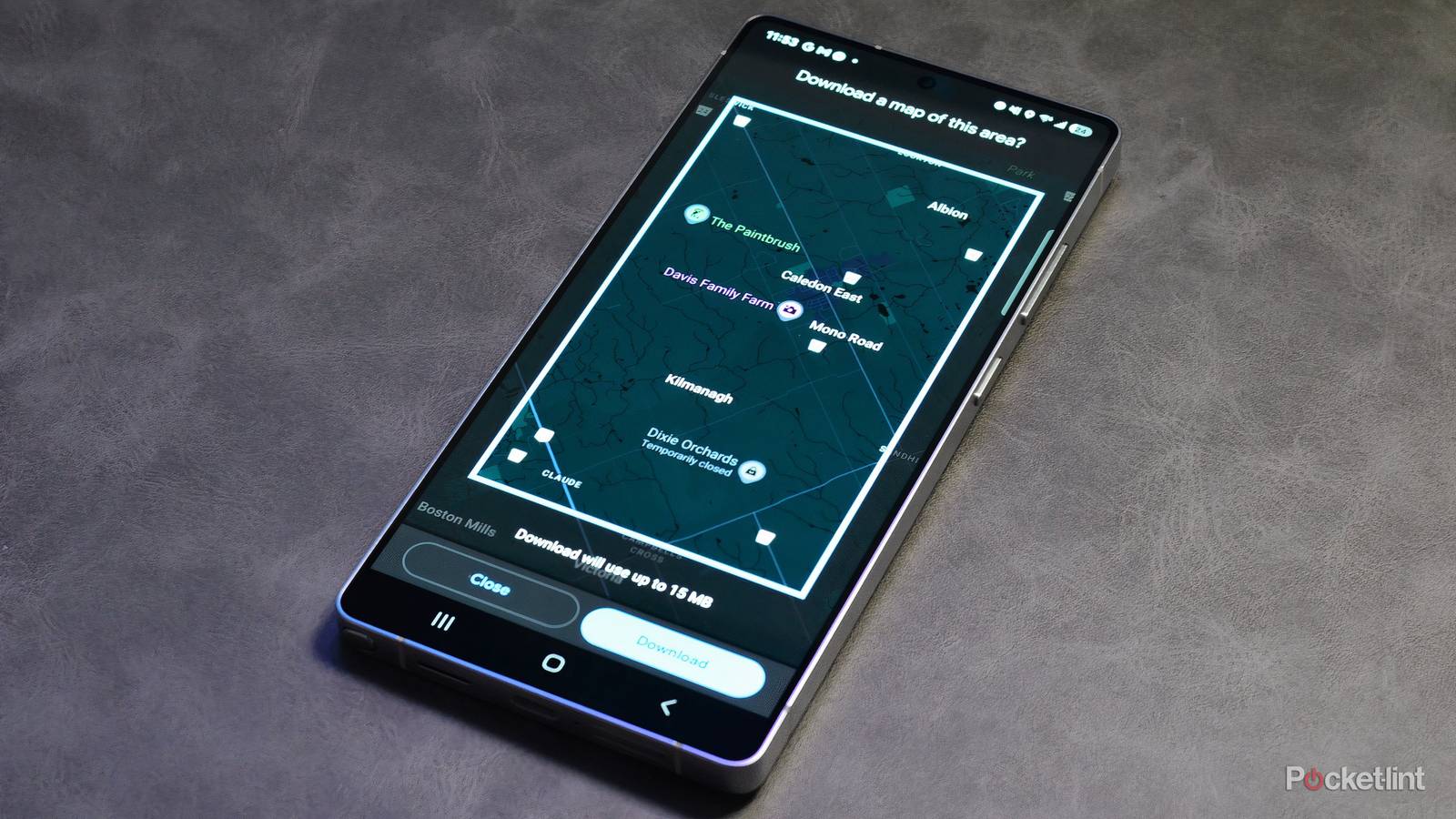
Your high precedence, then, must be to save lots of offline navigation information for as a lot of your route as your cellphone has area for. In Google Maps, this is so simple as trying to find an space and discovering the Obtain offline map button in its information card. In Apple Maps, you may need to faucet in your profile icon, then Offline Maps > New to choose a location. If you have already got some areas saved, be sure to replace them earlier than you head out.
Your high precedence must be to save lots of offline navigation information for as a lot of your route as your cellphone has area for.
Additionally, remember to save a number of maps for those who want detailed instructions. That is as a result of the broader your view is, the much less info an app is prone to retailer. It is likely to be high quality to save lots of a zoomed-out view of the interstate, however you may desire a city-specific map for determining learn how to get to a lodge or airport.
Do issues the old school means (kind of)

Like lots of you, I assume, I rely closely on on-line providers to arrange my every day life. If a chunk of knowledge I want is not in e-mail, it is most likely stashed someplace like Google Hold or iCloud Notes. If I’ve booked a flight, occasion, or lodge keep, I most likely did it on the net or by way of a cellular app.
Generally, although, you want that type of info offline simply as a lot as you do driving instructions. It is likely to be the small print of your airplane ticket, or the itinerary for a port tour. Maybe the worst factor is needing an handle — Google Maps cannot prevent if you do not know the place you are going within the first place.
If one thing is crucial to your journey, be sure it is saved someplace in your cellphone, or on paper you probably have entry to a printer. Relating to digital copies, I take advantage of note-taking apps, or just screenshots of related apps or internet pages. If I am particularly paranoid, I am going to hold each paper and digital variations of things.
For me, that tends to be tickets, itineraries, and reserving numbers. Purchase a highway atlas for those who do not need to rely upon cellphone navigation.
Use the chance to preserve energy
Chances are you’ll want the juice on the opposite finish

The three most power-hungry elements of a smartphone are its processor, its show, and its wi-fi radios. That final one would possibly initially appear unusual, however even when a radio is not actively transmitting information, it nonetheless must determine close by entry factors. Mobile radios specifically are consistently trying to find towers, gearing as much as transition you as one sign will get weak and one other turns into sturdy. You’ve got most likely been switched between towers many instances with out noticing a second of downtime.
Should you’re not driving, you would possibly as properly activate Low Energy Mode (on iPhones) or Battery Saver (on Android) to stretch your cellphone so far as potential.
If you already know an space would not have protection (and you have already acquired all of the offline information you want) you would possibly as properly flip mobile off till you are again in civilization. On an iPhone, swipe down from the highest of your display screen to open Management Heart, then faucet on the mobile bars icon, which must be highlighted in inexperienced. You will discover one thing comparable in Android’s Fast Settings, although the look of the icon could differ from gadget to gadget.
This tactic is especially helpful on the longest journeys, reminiscent of my flights to see family and friends on the opposite aspect of the continent. These are inclined to push battery life to the boundaries, and once they do not, it is nonetheless good to have some energy in reserve in case issues go sideways. Should you’re not driving, you would possibly as properly activate Low Energy Mode (on iPhones) or Battery Saver (on Android) to stretch your cellphone so far as potential. Yow will discover these below your Settings app’s Battery menu if there is not a Management Heart or Fast Settings shortcut.
Trending Merchandise


Wireless Keyboard and Mouse, Ergonomic Keyboard Mo...


Wi-fi Keyboard and Mouse Combo – Rii Commonp...

LG FHD 32-Inch Computer Monitor 32ML600M-B, IPS wi...



ASUS RT-AX86U Pro (AX5700) Dual Band WiFi 6 Extend...