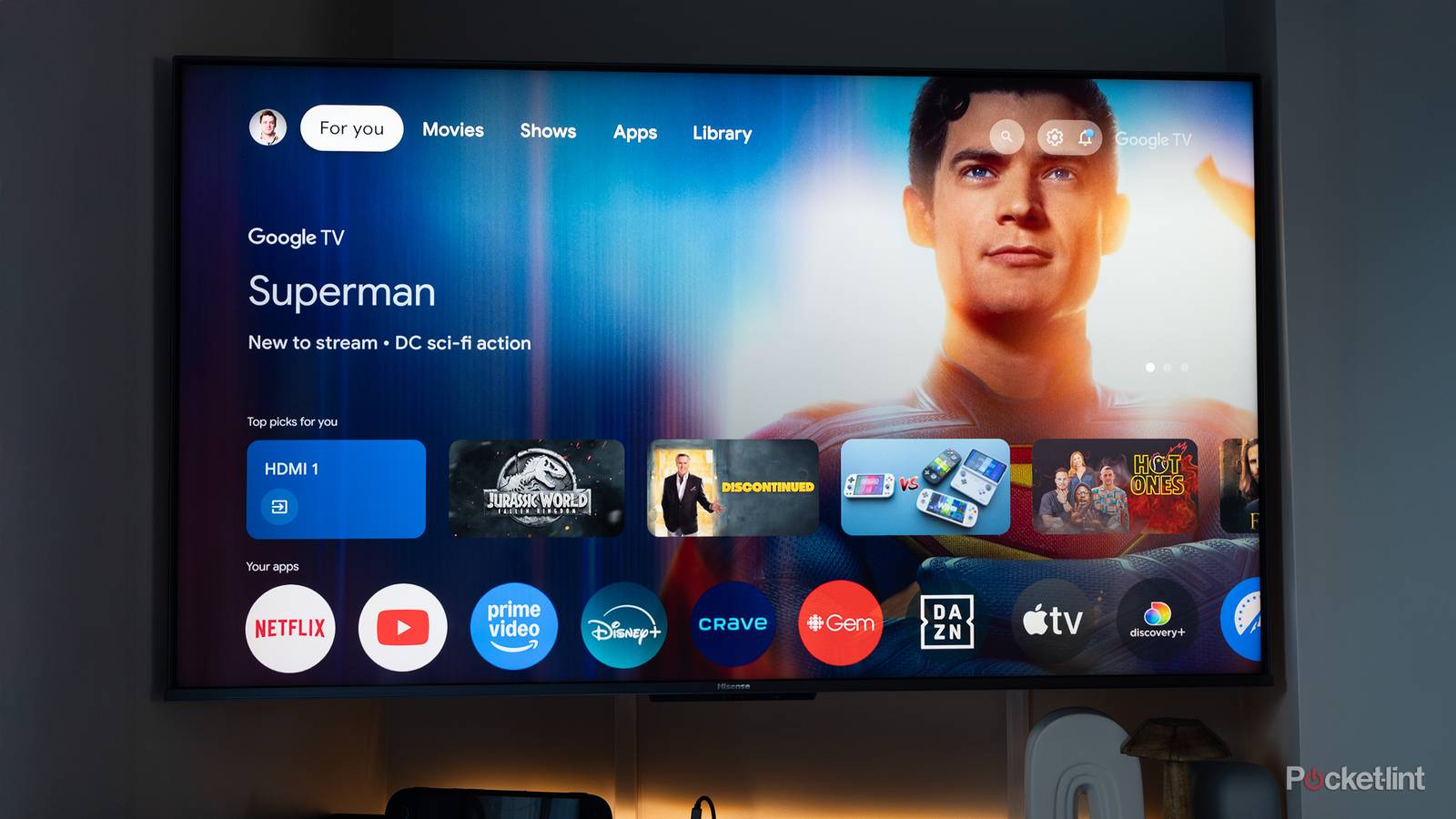
Now that I give it some thought, I virtually by no means use a high-tech system the best way it comes within the field. That is impractical in numerous instances — a smartphone or a laptop could be fairly restricted should you did not customise it immediately — however even when it’s an choice, I inevitably spend time altering settings. I wish to know that I am getting a super, customized expertise, not only one that is adequate for the typical particular person.
That philosophy extends to TVs, as you may need guessed. After I purchased my present Google TV set, I spent an absurd period of time going by menus, tweaking all the pieces till it was simply the best way I appreciated it. The majority of my efforts have been focused on image high quality, so I can communicate fairly confidently on choices you need to modify (or contemplate adjusting) if you need one of the best illustration of your motion pictures and TV exhibits.
Image Mode
A timesaver, or no less than a baseline
On any TV, actually, Image Mode is the very first thing you need to go to. In case your tastes aren’t choosy, you might be able to cease your customization proper there, merely juggling between a number of presets to seek out the one you want most. When that is not sufficient, selecting a preset can nonetheless save time establishing a baseline for different changes.
Filmmaker Mode strips away a TV’s post-processing results, with the aim of faithfully recreating the colours, framerates, and different particulars supposed by studios.
Purists ought to start with Filmmaker Mode. This strips away a TV’s post-processing results, with the aim of faithfully recreating the colours, framerates, and different particulars supposed by studios. Actually many non-purists ought to give this a shot too, since by definition, it prevents content material from trying unnatural. It isn’t for everybody although — the mode might be too darkish for some rooms, and a few folks will want the additional “punch” of post-processing regardless. I personally use a setting known as Theater Evening.
As a rule, you need to most likely keep away from any Vivid or Dynamic presets, since these can significantly exaggerate parts like distinction and sharpening (extra on these later). Likewise, keep away from Sports activities, except maybe you are working a sports activities bar. This tends to activate movement smoothing and different settings that sabotage the look of something cinematic, and it isn’t like Filmmaker Mode will someway make a soccer sport look terrible.
Movement smoothing
A demon with many names

Let’s zero in on movement smoothing, which needs to be disabled no matter which presets you employ. The function is meant to forestall blur in fast-moving content material like sports activities. To do that, nonetheless, TVs usually depend on body technology, i.e. inserting frames the place none beforehand existed. This may work correctly should you’re watching one thing meant to be seen at a excessive framerate — but it surely’s completely depressing with something shot on the 24fps cinematic customary. The end result tends to be the “cleaning soap opera impact,” making $100 million blockbusters appear like they’ve the price range of a ’90s episode of Common Hospital.
The know-how is not whilst related because it was. A rising variety of TVs now assist variable refresh charges (VRR), matching efficiency to onscreen content material. There is no cause you need to be seeing distracting ranges of blur, since your TV can pace up or decelerate as vital.
Be warned that some TV makers like to present movement smoothing a intelligent identify, similar to “Movement Enhancement,” “Movement Readability,” or “Motion Smoothing.” You will see one thing alongside these strains should you head over to Settings -> Show & Sound -> Image -> Superior Settings. If there is a separate “blur discount” choice, attempt that as a substitute.
Brightness and distinction
Spend a while with these

Whenever you’re altering brightness, what you are actually doing is adjusting your TV’s black ranges — that’s, how dim shadows (and different darkish hues) can get. They need to be low sufficient to maintain shadows black as a substitute of grey, however excessive sufficient that you could make out any supposed particulars. One of the simplest ways of testing that is with darkish scenes in a favourite film or TV present, considered underneath typical room circumstances. In the event you usually watch at evening with the lights down, attempt to get as near that as you may.
Complicating issues is that some TVs set brightness routinely utilizing ambient gentle sensors. You could or could not like how this appears to be like — by which case you need to be capable of disable auto-brightness, or tweak it on a relative foundation. Both method, you need to depart high dynamic range (HDR) on, since this permits a wider vary of extremes (in supported content material) with out sacrificing that all-important element.
I am together with distinction right here due to how a lot it is intertwined with brightness. Ramping it up too excessive can kill particulars in each highlights and shadows, so you will have to discover a stability between that and holding the “pop” in pictures.
Plan on experimenting a number of occasions. You would possibly initially like the place issues are set, solely to find your settings really feel off-kilter when a brand new film or present comes alongside. Ultimately, you will decide on ranges that ought to work for almost all the pieces.
Sharpness and noise discount
Picture enhancements that are not

Superficially, sharpness feels like one thing you need to ramp up as excessive as doable. Who would not need the crispest doable picture on a 4K TV? In follow, nonetheless, your set ought to already be loads crisp earlier than any post-processing, so it is all too simple to introduce distracting artifacts like halos. Strive beginning with zero sharpening, then growing ranges provided that you discover that pictures seem mushy. On my Hisense TV, the candy spot appears to be within the mid-to-low vary.
Like movement smoothing, noise discount (as soon as once more underneath Superior Settings) needs to be disabled with out query. That is supposed to repair pictures with unusually noisy or blocky textures, however as a rule, this takes issues too far in the wrong way. It will possibly make pictures look plastic, or easy out movie grain that filmmakers launched on function. It is largely pointless whenever you’re coping with pristine digital content material direct from a streaming service or Blu-ray disc, a lot much less a sport.
Colour temperature
A small setting with large impression

There are a selection of color-related settings within the Google TV interface, similar to tint and saturation, and it might be price messing with these as soon as you have obtained all the pieces else on lock. After I’m simply getting began, although, I discover it is most vital to discover a TV’s coloration temperature choices.
This may repair biases in your TV’s panel know-how, or just produce one thing that is extra in step with your sensibilities.
To be clear, you could not want to the touch these in any respect, since coloration temperature is among the issues affected by Image Mode. However should you’re discovering pictures unusually “cool” or “heat” after the actual fact, your TV ought to no less than provide Heat, Customary, or Cool presets you may toggle between. These can repair biases in your TV’s panel know-how, or just produce one thing that is extra in step with your sensibilities. I are inclined to want hotter temperatures throughout the board — however you would possibly actually get pleasure from cooler hues. As with brightness and distinction, you could want to come back again to paint temperature a couple of times to discover a setting you may dwell with 24/7.
Trending Merchandise


Wireless Keyboard and Mouse, Ergonomic Keyboard Mo...

Wi-fi Keyboard and Mouse Combo – Rii Commonp...
LG FHD 32-Inch Computer Monitor 32ML600M-B, IPS wi...


ASUS RT-AX86U Pro (AX5700) Dual Band WiFi 6 Extend...